
Created in 2014, White January is a global movement that invites society to look more closely at mental health....
February 03, 2026
Language:


DATE: 11/11/2025
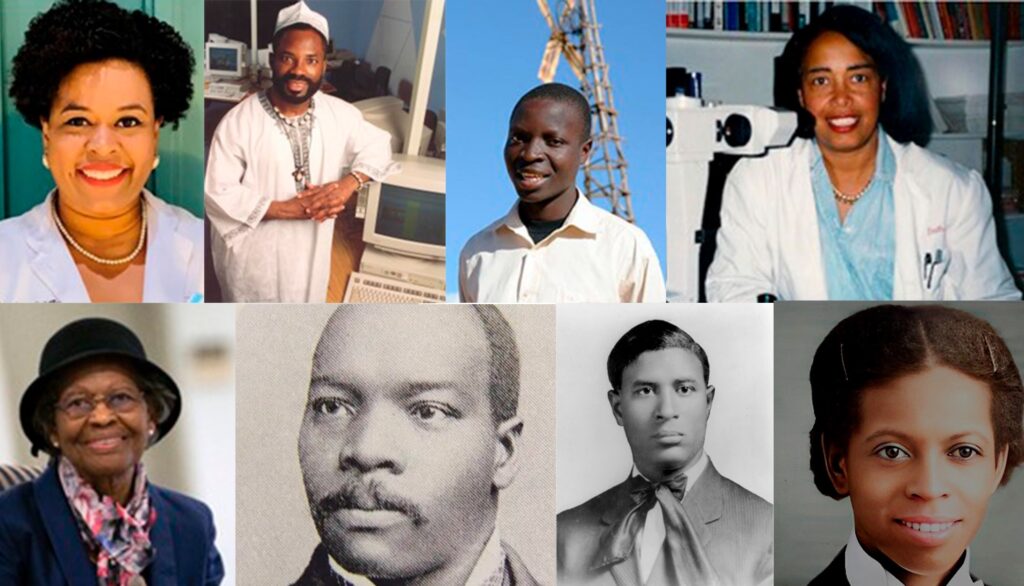
In the month that celebrates Black Awareness, Horiens is promoting the campaign “Time to Innovate”, an initiative by the Diversity and Inclusion Committee that invites team members to reflect on how the plurality of experiences and perspectives drives innovation and fosters the evolution of society.
Journeys that Drove Progress
Throughout November, the campaign has been sharing stories of Black individuals who transformed the world with their ideas, courage, and talent—outcomes of their personal experiences and diverse perspectives.
They used innovation as a path to change scenarios and promote significant advances in various fields. Check out the stories we shared at the end of this publication.
Diversity that Inspires and Generates Innovation
Valuing diversity is an essential pillar for corporate innovation, and more and more studies confirm this relationship.
According to research by McKinsey & Company, for example, companies with greater ethnic and racial diversity in their executive teams are 36% more likely to achieve above-average financial performance. A Deloitte study shows that diverse teams are 20% more creative and have greater capacity to solve complex problems, highlighting the strategic value of inclusion in companies.
“By recognizing different journeys and ways of thinking, we reinforce Horiens’ commitment to inclusion, equity, and respect for differences, in alignment with best ESG practices and our own corporate culture,” says Fernanda Antonelli, Horiens’ Director of People, Communication and Marketing, and coordinator of the Diversity and Inclusion Committee.
“When we bring together people with different experiences, backgrounds, and perspectives, we create more creative, empathetic environments capable of generating new and relevant solutions,” Fernanda adds.
Friday Talk
As part of the campaign, the Diversity and Inclusion Committee at Horiens also proposed and will lead a special edition of the internal event “Friday Talk”, dedicated to the theme of racial diversity.
The meeting will bring together company members for an open dialogue, learning, and exchange of experiences about the role each person plays in building more inclusive and innovative environments.
 Gladys May West
The mind behind GPS
In 1980, American mathematician and programmer Gladys West programmed the computer that calculated the Earth’s geoid (the planet’s true shape) with enough precision to enable the creation of GPS. Her journey was far from easy, marked by a poor childhood and tremendous effort to complete her studies. Her work paved the way for one of the most indispensable technologies in today’s world.
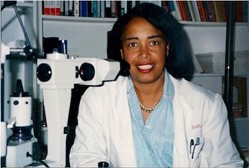 Dra. Patricia E. Bath
Pioneering in Medicine
The daughter of a factory worker and a homemaker, Patricia Bath broke racial and gender barriers to become the first Black woman to receive a medical patent in the United States.
In 1986, she invented the Laserphaco Probe, a device that uses laser technology to safely and precisely remove cataracts, revolutionizing eye surgery and restoring sight to millions of people—especially in communities with limited access to healthcare.
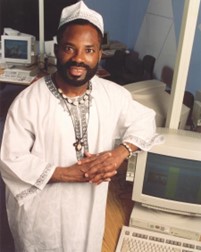 Dr. Philip Emeagwali
The Visionary Behind Supercomputers
Born in Nigeria in the 1950s, Philip Emeagwali had to leave school at the age of 14 due to financial difficulties, but his father continued teaching him at home with 100 math exercises a day.
Years later, in the late 1980s, he developed parallel computing techniques that inspired the creation of modern supercomputers, revolutionizing the processing of massive amounts of data.
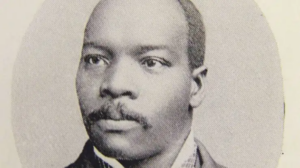 Granville Woods
The Inventor Who Revolutionized the Rails
Raised in a humble family in Ohio in the 19th century, Granville Woods began working early in workshops and railroads, where he discovered his passion for electrical engineering.
Holder of more than 60 patents, he developed the telegraph system for trains, which allowed communication between locomotives and stations—a decisive advancement for railway safety.
After successfully defending the authorship of his invention in a dispute with Thomas Edison, he declined an invitation to work with the famous inventor, reaffirming his independence and determination.
 Garrett Augustus Morgan
Innovation That Saved Lives
Born in 1877, the son of formerly enslaved parents, Garrett Morgan began working as a child and taught himself mechanics.
An entrepreneur, he founded his own workshop and, in 1923, developed the safety hood—the predecessor of gas masks—an invention that gained prominence when he personally used it to rescue workers trapped in a tunnel.
He also created the three-position traffic signal, the basis of today’s traffic lights, making cities safer and more organized.
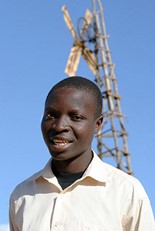 William Kamkwamba
The Boy Who Harnessed the Wind
At age 14 in Malawi, William Kamkwamba had to drop out of school due to lack of resources, but he continued studying in libraries.
Inspired by science books, he built a windmill from recycled parts to generate electricity for his village—a gesture of curiosity and creativity that inspired the world and led to the film The Boy Who Harnessed the Wind.
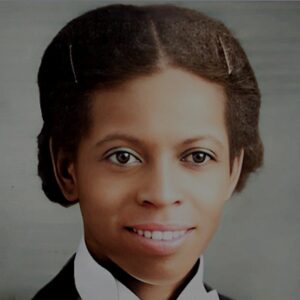 Enedina Alves Marques
Brazil’s First Black Female Engineer
Born in Curitiba in 1913, Enedina Alves Marques faced racism and sexism to graduate as a civil engineer in 1945, becoming the first Black woman in the country to earn this title.
As a public servant at the Paraná State Department of Water and Electric Energy, she contributed to major projects and paved the way for greater female and Black representation in Brazilian engineering.
 Dra. Jaqueline Goes de Jesus
Science That Saves Lives
The daughter of a teacher and inspired by a commitment to education, Jaqueline Goes de Jesus became a biomedical scientist and researcher.
In 2020, she led the team that sequenced the coronavirus genome just 48 hours after the first case in Brazil, proving that science and collaboration save lives. Her work contributed to global progress in science and public health.
Created in 2014, White January is a global movement that invites society to look more closely at mental health....
By Fernanda Antonelli, Head of People, Communication and Marketing at Horiens Last year, I had the pleasure of serving...
by Marcelo Vitório* Being at Mind The Sec 2025, the largest cybersecurity event in Latin America, was a valuable...
By Vanessa Falco Innovation in energy matrices is redefining the role of risk management in the sector. As emerging...
No comments