
Diálogos de Impacto, the podcast produced by the Norberto Odebrecht Foundation (FNO), has just released a new episode dedicated...
August 06, 2026
Language:


DATE: 03/05/2026
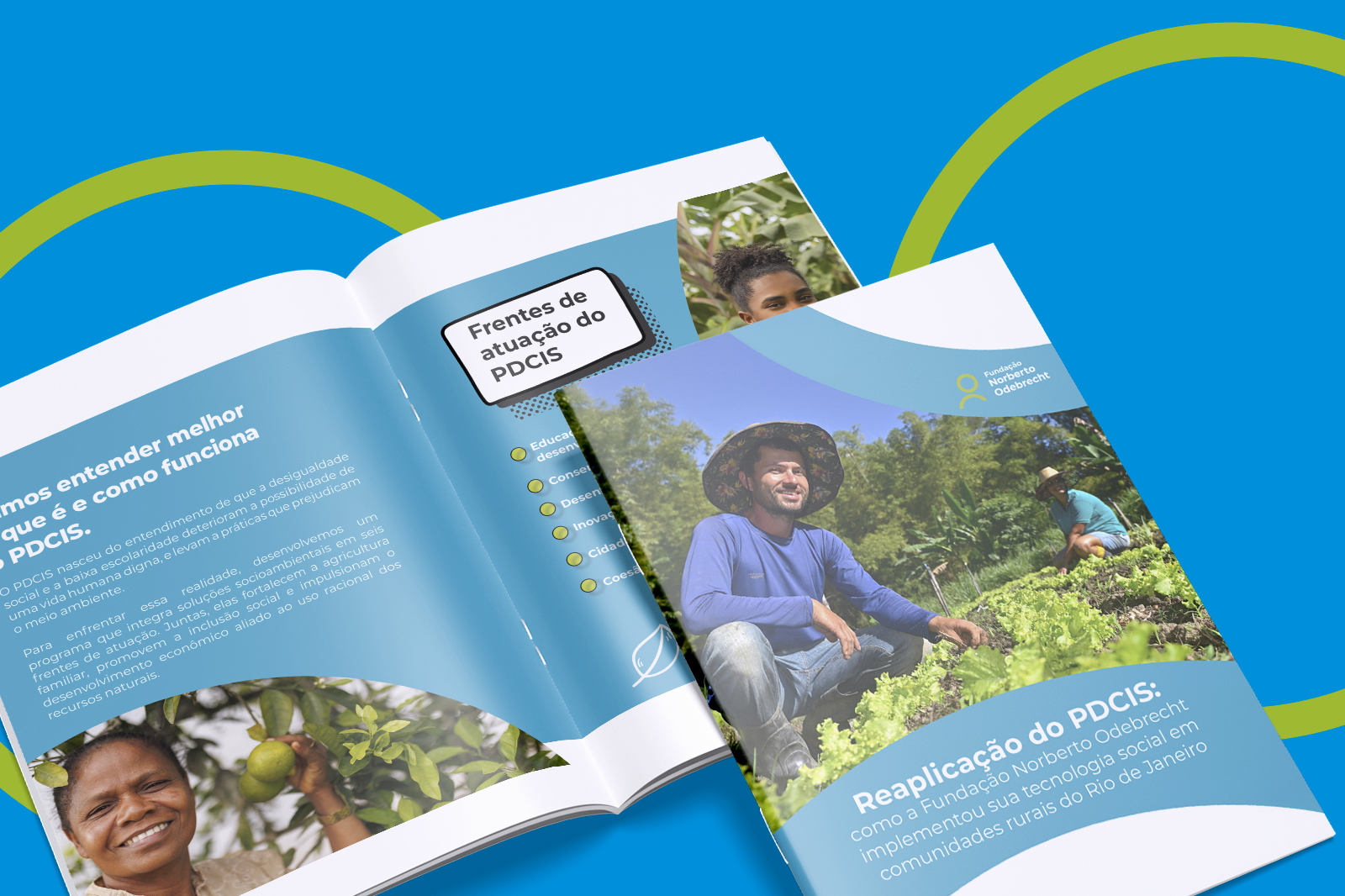
The Norberto Odebrecht Foundation (FNO) has just launched a guidebook presenting the first experience of replicating its Integrated and Sustainable Development Program (PDCIS) in a new territory. The publication compiles the learnings, strategies, and results of the initiative’s implementation in the district of Sana, in Macaé (RJ), between 2022 and 2024, marking a new phase in the institution’s journey.
Created in 2003 in the Lower South of Bahia, the PDCIS was conceived with the purpose of promoting sustainable territorial development in regions with high agricultural potential and socio-environmental vulnerabilities. After nearly two decades of operation, the program reached methodological maturity, was systematized, and proved its long-term impact—conditions that paved the way for a new step in its history.
It was in this context that the opportunity emerged to expand this social technology beyond Bahia. Between 2022 and 2024, the PDCIS Sana was implemented through a partnership between the Foundation, Ocyan, the Municipality of Macaé, the Association for the Protection of Environmental and Cultural Heritage (APPAC Tororó), and the Family Farming Producers Association of Sana (APAF).
The initiative was structured around institutional strengthening actions, strategic partnerships, volunteer engagement, and the adaptation of consolidated PDCIS practices to the local reality. Over two years, rural producers from seven communities in Sana benefited from the project, which strengthened family farming by integrating technical knowledge, innovation in the field, and commitment to environmental preservation.
Developed by FNO’s Knowledge Production front, the guidebook “Replication of the PDCIS: How the Norberto Odebrecht Foundation implemented its social technology in rural communities of Rio de Janeiro” was designed to systematize the experience through a process that organized and analyzed practices to transform them into structured knowledge. It documents the initiatives that shaped PDCIS Sana, the main learnings from the replication process, and the results achieved—seeking to understand what was done, why it was done, how it was done, and what impact it generated. It also offers reflections on how the values of Our Culture—the organizational culture of the Novonor Group—were present at each stage of the project’s coordination.
“What was carried out in Sana as a pilot project is a model that can be expanded. This replication potential only exists because at every stage there was a genuine spirit of service. With this strong and dynamic culture, we aim to expand PDCIS further, reaching new beneficiaries and territories,” says Cristiane Nascimento, FNO’s director.
Click here to access the guidebook!
Diálogos de Impacto, the podcast produced by the Norberto Odebrecht Foundation (FNO), has just released a new episode dedicated...
The month of July marked the conclusion of another edition of the Nossa Cultura Program within the Integrated Development...
The Norberto Odebrecht Foundation (FNO) has been awarded the Ethnic-Racial Diversity Seal for the fifth consecutive time. The recognition...
The Brazilian experience that has been transforming rural communities in the Lower South of Bahia for more than two...
No comments